Call us now :08045476576
 Send Inquiry

 Send Inquiry
Two Roll Thread Rolling Machine
Price 250000.0 INR/ Piece
MOQ : 1 Unit
Two Roll Thread Rolling Machine Specification
- Color
- Grey
- Machine Type
- Two Roll Thread Rolling Machine
- Usage
- Industrial
- Power
- 5 Horsepower (HP)
- Automation
- Automatic
- Raw Material
- Mild Steel
- Place of Origin
- India
Two Roll Thread Rolling Machine Trade Information
- Minimum Order Quantity
- 1 Unit
- Supply Ability
- 50 Units Per Month
- Delivery Time
- 7 Days
- Sample Available
- No
- Sample Policy
- Sample costs shipping and taxes has to be paid by the buyer
About Two Roll Thread Rolling Machine
Advanced Thread Rolling Technology
Utilizing a two-roll mechanism, this automatic thread rolling machine streamlines the production of threaded components. Its automated features reduce manual intervention, ensuring consistent results and significant boosts in productivity. The use of mild steel as a raw material combines durability with superior workability, making it ideal for a variety of industrial threading applications.
Designed for Industrial Excellence
This machine has been meticulously developed to withstand rigorous industrial demands. The 5 HP power rating allows for reliable operation even during extended production runs. Crafted and distributed from India, the design reflects a focus on reliability, ease of maintenance, and the ability to integrate seamlessly with existing manufacturing setups.
FAQ's of Two Roll Thread Rolling Machine:
Q: How does a two roll thread rolling machine with automation operate?
A: The machine operates by automatically feeding mild steel workpieces between two rotating rolls. The rolls apply pressure, forming precise threads on the material without the need for manual adjustment, ensuring accurate and repeatable results for industrial applications.Q: What raw materials can this machine process?
A: This particular model is optimized for threading mild steel, offering reliable performance with this material due to its balance of strength and machinability, commonly used in industrial manufacturing.Q: When is the best time to use this automatic thread rolling machine in production?
A: It is most beneficial during high-volume production runs when consistent, high-precision threading is required, particularly when efficiency and minimizing manual labor are priorities.Q: Where is this thread rolling machine manufactured and distributed?
A: The machine is manufactured in India and supplied by a network of distributors, exporters, manufacturers, suppliers, and traders throughout the country. It is readily available to businesses countrywide.Q: What is the threading process followed by this machine?
A: The threading process involves automatic feeding of mild steel rods or blanks into the two-roll system, where pressure from the rolls forms threads rapidly, producing uniform thread patterns without removing material.Q: How is this machine used in an industrial setting?
A: Operators integrate the machine into their manufacturing line, set up for mild steel workpieces, and rely on its automated functions to handle threading efficiently with minimal supervision, making it suitable for large-scale operations.Q: What are the primary benefits of using this automatic thread rolling machine?
A: Key benefits include increased production speed, high consistency in thread quality, reduced manual labor requirements, and minimal material waste, ultimately leading to cost savings and improved productivity for industrial users.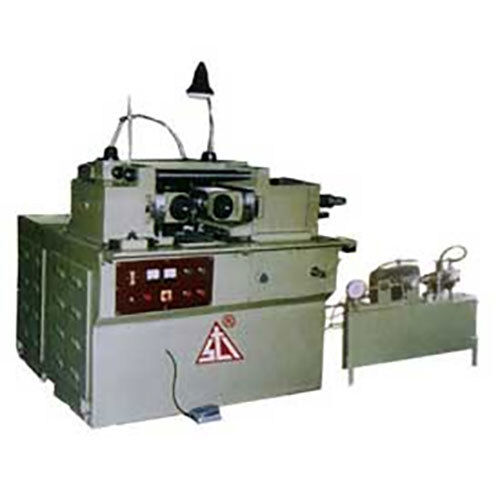
Tell us about your requirement

Price:
Quantity
Select Unit
- 50
- 100
- 200
- 250
- 500
- 1000+
Additional detail
Mobile number
Email

More Products in Thread Rolling Machine Category

Three Roll Thread Rolling Machine
Price 250000.0 INR / Unit
Minimum Order Quantity : 1 Unit
Voltage : 415 Volt (v)
Condition : 1
Automation : Automatic
Place of Origin : India

 Send Inquiry


Our Products
- Threading Machines
- Pipe Socket
- Linco Threading Machine
- Thread Rolling Machine
- Flat Thread Rolling Machine
- Portable Threading Machine
- End Facing Machine
- Dies
- Coventry Chasers
- HSS Threading Chasers
- Bolt Pipe Threading Die Head
- Tangential Threading Chasers
- Threading Taps
- Tangential Chasers
- Coventry Chaser
- Chaser Holder


C-138, Phase-V, Focal Point,Ludhiana - 141010, Punjab, India

Mr Iqbal
(MD)
Mobile :08045476576
 Send Inquiry
 Send SMS
 Call Me Free

Developed and Managed by Infocom Network Private Limited.


 English
 Spanish
 French
 German
 Italian
 Chinese (Simplified)
 Japanese
 Korean
 Arabic
 Portuguese
